





A few students will be selected this school year to travel to San Francisco/Silicon Valley for 4-5 days, where they will have the opportunity to meet and network with UCSD alumni in the Startup and Venture Capital industry and take company tours. The program aims to help students develop their own career interests as well as provide them with the necessary tools and guidance to be successful. Additionally, we work closely with the students to help them obtain internships or full-time positions within the industry.
If you are a student entrepreneur or a student interested in joining a startup or breaking into the venture capital industry, we strongly encourage you to apply. Please see below for application deadlines.
BrightEyes Application Process:
1. Send Resumes to [Brighteyes.mentorship@gmail.com] by January 10th 12:00 PM (Optional: Cover Letter)
2. Written Assessment| January 31st
3. Phone Interviews | February 7th – February 14th
4. Final Applicants will be notified if chosen for program
Criteria:
+ Undergraduate UCSD Student
Please submit all resumes/cover letters to Brighteyes.mentorship@gmail.com. We look forward to reviewing your application.
+ Network with UCSD Alumni
+ Explore Opportunities in Venture Capital & Start Up
+ Take company tours in Silicon Valley and San Francisco
BrightEyes
BrightEyes is a program dedicated to providing students with an opportunity to experience a potential career and grow their knowledge and network in an industry.
“If you control your factories, you control your quality. If you control your distribution, you control your image.”
–Bernard Arnault, Chairman and CEO of LVMH Moët Hennessy – Louis Vuitton
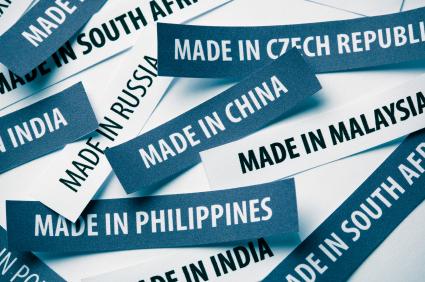
Poor factory conditions and illegal subcontractors are ongoing issues that have not been properly or effectively addressed. Since the 1,127 deaths from the collapse of the Rana Plaza garment factory in Bangladesh in April (the worst in Bangladesh history), few changes have been enforced at the more than 4,500 garment factories in Bangladesh. Just recently, a factory fire in Dhaka killed 9 workers. Countries with heavy manufacturing activity struggle to enforce factory standards and are careful to make policy decisions that could negatively impact profitability and workforce headcount. The pressure for these countries to maintain low costs, which involve restricting workers’ rights, and to sustain their export-led growth is the direct result of offshore manufacturing.
The golden years for offshore manufacturing are retiring as costs abroad are rising due to more expensive labor and energy costs. Manufacturing cost differences between China and the U.S. have dropped from an 18% discount in 2003 to only around 7% this year. A number of companies have shut down their factories in China as a result of increasing labor costs and moved their operations to Southeast Asia, India and Mexico (e.g. Addidas, GE, Nike, Lenovo), where the cost gap has remained fairly unchanged since 10 years ago. However, companies are now finding more challenges than cost in countries like Cambodia and Bangladesh, specifically illegal subcontracting, dangerous factory conditions, protests and quality control issues.
Illegal subcontracting is the result of orders that are too large to be filled by a single contracted factory. Portions of orders are subcontracted to smaller factories to help meet tight order deadlines. This has not only resulted in quality decline and product inconsistency, but also poor labor conditions because of the lack of monitoring and oversight of these factories. Corruption from this practice has even extended to prison facilities, where inmates are found producing goods to fulfill a small order to be sent back to the main factory.
Recent fires and deaths at illegal factories have increased concerns from brands, factory owners, governments and human rights organizations. Increasing foreign involvement in offshore manufacturing has resulted in a push for a wave of initiatives to regulate and transform the current factory conditions and processes at these manufacturing sites. This month, the International Labour Organization has announced the return of the Better Factories Cambodia program (2001-2005), in which factory conditions will be publicly reported. Bangladesh has also introduced an inspection program this year in response to the numerous factory deaths.
Companies also recognize the threat to their businesses if they do not respond to illegal manufacturing activities and poor labor conditions. Recall the global boycott against Nike in the 1990’s for its sweatshops in Asia. Today, protests are still ongoing in Bangladesh as workers demand for better pay and working conditions and represent those who died in the Rana Plaza collapse. Companies will need to invest in factory supervisors to facilitate manufacturing abroad and become more involved in the inspection process to ensure worker safety and rights as well as prevent future violent protests that would paralyze production and delay order requests.
As factories are forced to improve their factory conditions, improve workers’ rights, increase wages and invest in skilled inspectors, manufacturing costs in those countries will rise. The increasing burden and costs of manufacturing abroad have given rise to the opportunity to reshore U.S. manufacturing.
New technologies, materials, systems and processes are transforming the manufacturing environment in the U.S. to become one that is more automated and able to support mass customization. This is the New Manufacturing Economy. Technology and new platforms are entering at every stage of the production process to improve the efficiency and accuracy of development from design to finish and to ensure high quality products are delivered to the buyers. And already, many of the advanced manufacturing solutions, such as 3D printing (To learn more about 3D printing, see my previous post: 3D Printing is the New Black) and robotic technologies, are becoming cheaper and more effective, providing more incentive for manufacturers to produce locally. Having a local manufacturing process also allows companies to react quickly to consumer demands and market trends, and increase speed to market. And with a recent revival of an interest in craftsmanship, more individuals are interested in becoming makers of their own ideas and are looking for local manufacturers to produce smaller quantities of their own designs (outsourcing manufacturing requires large orders and does not support individuals interested in sampling their various designs).
New technologies are simplifying the production process and making manufacturing more transparent. The adoption of advanced manufacturing solutions will not only allow companies to achieve lean manufacturing and improved product quality, but also allow them to adapt their factories to the safety and needs of their workers’. Moreover, issues can be more easily addressed if local, compared to having to hire independent, oversea factory advisors and deal with local governments and foreign policies.
Below are a few of my favorite companies that are disrupting manufacturing today:
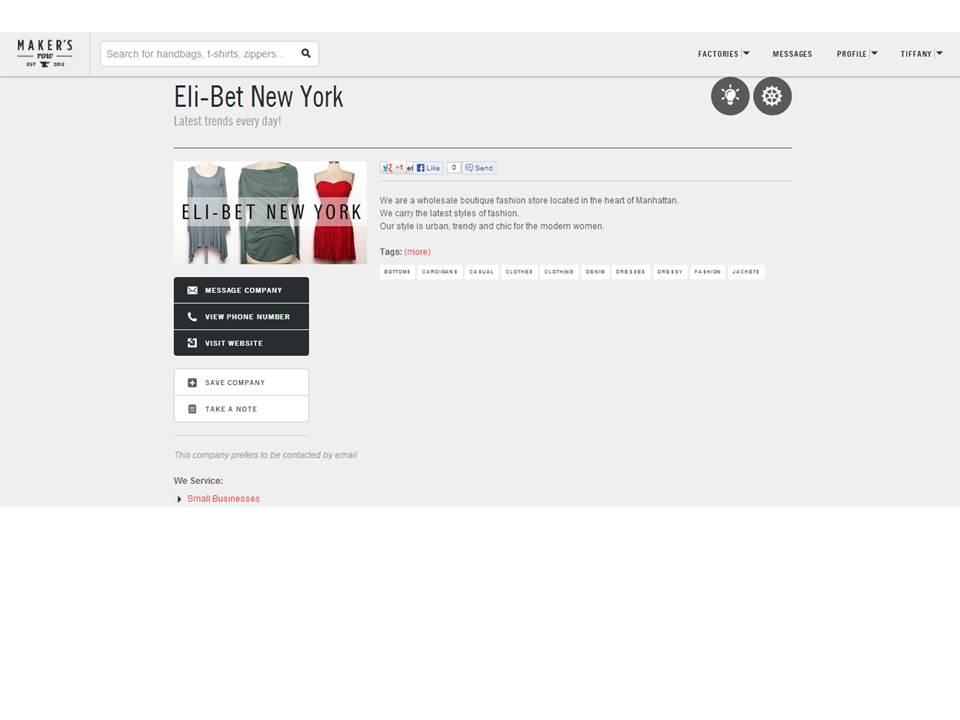
Maker’s Row is an online marketplace that connects product-based businesses or designers with American manufacturers. The platform separates the manufacturing process into 6 stages for the user to choose from: ideation, drafting, materials, sample-making, tooling and production. After choosing a stage of the process, a collection of manufacturers are recommended to the user. Included with each manufacturer listed are its contact information, capabilities, hours and location, target customers, and reviews. Maker’s Row has both standardized the selection method for a manufacturer and customized the manufacturing process for its users.
See this video to learn more about Maker’s Row: bit.ly/1azQlnC

Shapeways allows individuals to make, buy and sell their own products, creating a platform for online boutiques specialized in 3D printed products. Shapeways is enabling individuals to become designers and merchants of their own ideas.
See this video to learn more about Shapeways: http://bit.ly/QqPxb

3D Hubs is a collaborative production platform that enables 3D makers to connect with local 3D printer owners and print customized products locally. The company allows owners to earn money with their 3D printer by joining the Hubs listing in their city. Each Hub determines its own printing price and 3D Hubs facilitates the print order process and collects a 15% commission on the price for each customer quote. Talk about speed to consumer! The company is building a global network and growing local communities around 3D printing. The network currently has over 500 3D printers spread across 200 cities.
Interested to see a partnership between 3D Hubs and Shapeways…
See this video to learn more about 3D Hubs: http://bit.ly/1cqMV7Z

Sight Machine uses networked cameras, vision algorithms and cloud computing to control quality, manage spot inspections and perform process analyses. The software allows a company to determine why parts are failing, identify trends and variations, and track relationships among scores of parameters. The company’s products and services work in the plant and across the supply chain to improve production, quality control and efficiency. Sight Machine is automating the inspection process and helping streamline assessment and operational management tasks.
See this video to learn more about Sight Machine: http://sightmachine.com/product
Joor is an online wholesale fashion marketplace that provides a digital platform to help streamline communication, discovery, and transactions between designers and retailers. Brands can feature their collections, search for potential boutiques and manage all of their orders online. Boutiques are able to access real-time information on a brand’s sales team and inventory availability.
Earlier this year, the company had more than 40,000 retailers and 600 brands using the site, including Diane von Furstenberg, Rag & Bone and Zappos, compared to 250 brands and about 7,500 boutiques back in 2011.
See this video to learn more about JOOR: http://vimeo.com/58486006


Sources: http://online.wsj.com/article/SB10001424052702303818704579089810120675896.html, http://pulitzercenter.org/reporting/asia-bangladesh-rana-plaza-tragedy-building-collapse-death-garment-factory-faulty-inspections-dangerous-conditions, http://news.thomasnet.com/IMT/2012/07/10/offshoring-vs-reshoring-the-business-perspective/, http://www.nytimes.com/2012/12/18/world/asia/bangladesh-factory-fire-caused-by-gross-negligence.html?ref=asia, http://techcrunch.com/2013/07/25/online-fashion-marketplace-joor-raises-15m-in-series-b-funding/, http://yourstory.in/2011/11/joor-facebook-of-fashion-ecommerce/,
Soon we will be able to check-in on our phones while traveling in Europe, Google Map a temple in Southeast Asia and replace our #latergrams with #instagrams.
Last week, T-Mobile announced that it will be eliminating international data roaming fees in more than 100 countries. As demand for international data roaming increases with increased penetration of smartphones and usage of mobile apps, it becomes more necessary to allow individuals to use their phones abroad. Currently, business customers generate the majority of roaming revenue, but we can expect revenue from individual usage to grow in the coming years. According to a report by Hot Telecom, global data roaming traffic is expected to grow 97 percent between 2012 and 2015 and global voice traffic to increase 39 percent. During 2007-2012, international data roaming grew by 630 percent in the European Union.
T-Mobile’s “Uncarrier” strategy comes at a time when leisure travel continues to increase and business travel spending is expected to be over a trillion dollars in 2013 and grow by 8.2% in 2014. With these trends, we can expect that other carriers will follow in providing more affordable or even free international data roaming and messaging. Travel will become easier and itineraries will become more spontaneous rather than planned with increased access to information for the traveler. What comes to mind are augmented reality applications that provide a solution to the needs shared by every traveler, which are to receive curated recommendations, discover a new place, learn something new and share the experience with friends.
I was in Amsterdam a few weekends ago and found it incredibly hard to navigate my way back to my hotel when I had ventured too far away. And if you haven’t been to Amsterdam already, I will tell you now that all the cobblestone streets look the same with the canal running between the canal houses. Dining was also a challenge as I had no idea where the “hot” local spots were and all the recommendations I had received from the concierge and guide books suggested that I eat at 5-star restaurants for tourists. Although I really enjoyed finding my own local gems, I couldn’t help but think that I was missing something truly unique. I had Yelped from the hotel but found that the reviews were from other tourists, and what I was really looking for were recommendations and reviews from locals. I found myself traveling with 3 different maps and notes scribbled all over them as I could not access internet or any apps once I had left the hotel. I had also written down the names of places or landmarks that I came across and would later google them to learn more about them. I know, too much work…
Below are a few apps that I am looking forward to using in my future travels!
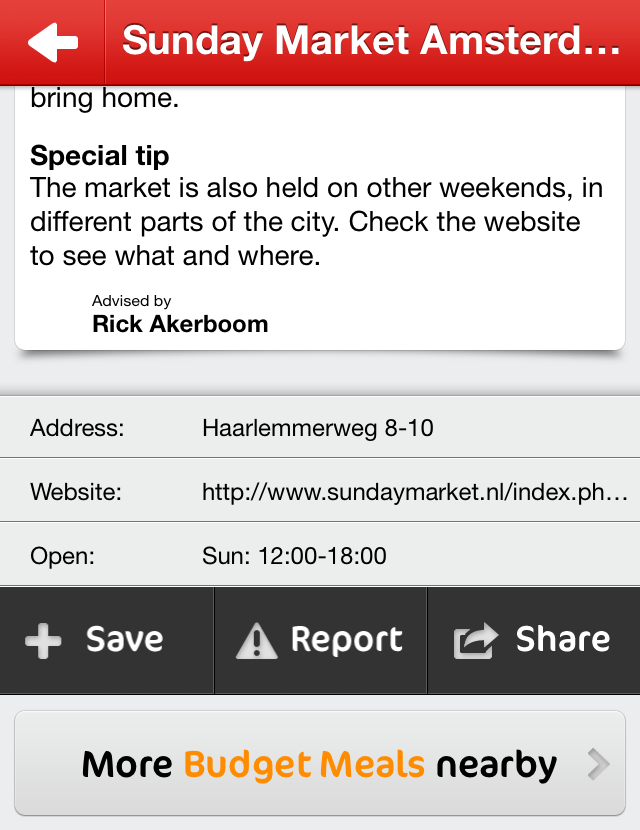
Like A Local (http://www.likealocalguide.com/) offers curated recommendations from locals to help travelers discover local eateries, entertainment, nightlife, shopping, etc. What I like most about this app is that the recommendations are all from local experts and it has both an offline and online component. The user is able to access maps and recommendations while offline. Once online, the app is able to show recommendations that are open and near your current location.


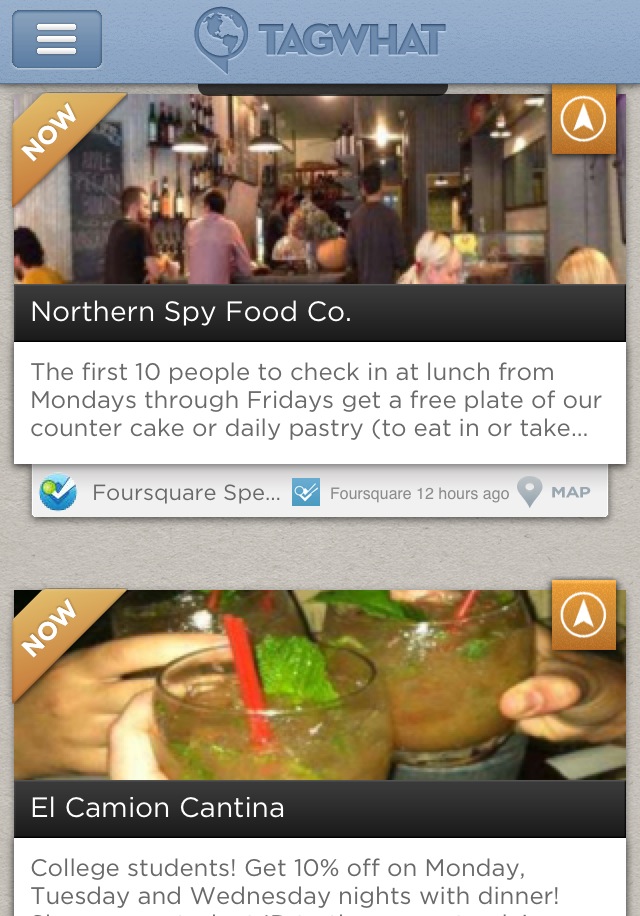
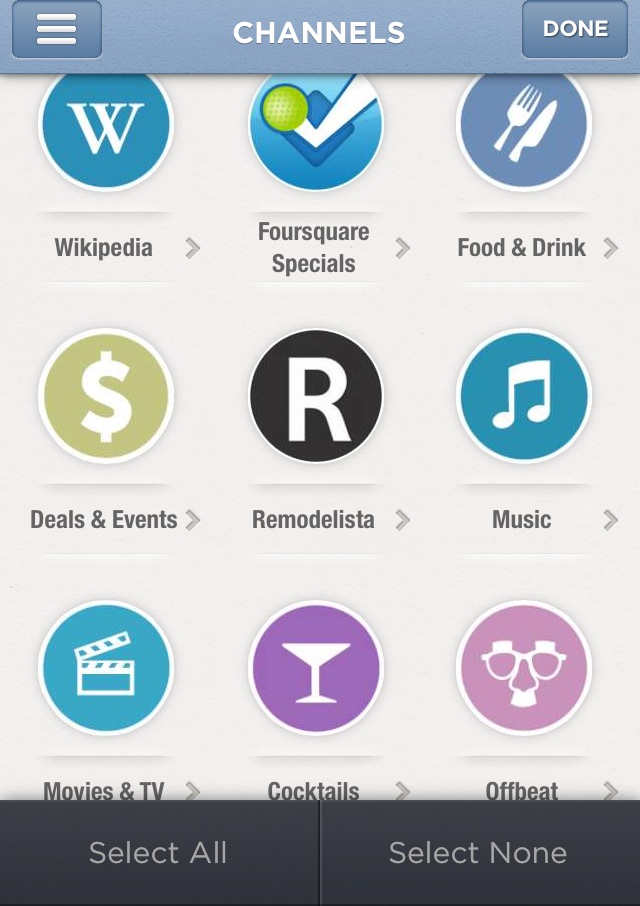
Tagwhat (http://www.tagwhat.com/) provides recommendations and local deals or events based on a user’s location and surroundings. Tagwhat gathers user-generated content near a specific location and information from Wikipedia as well as other open sources to provide real-time content. Deals are shared from social networks such as Foursquare and Facebook. Individuals are able to filter their recommendations by choosing which channels to feed their stream of content.
Although Tagwhat does not offer the personal reviews and tips from local experts such as Like a Local does, it has a great history component to it because it pulls content from Wikipedia. I also like that it offers current deals and event information.


Comparing Like A Local and Tagwhat to some other travel apps…
Wikitude does not allow a user to easily filter the many nearby points of interest (less is more…just like the Cheesecake Factory menu, it can be overwhelming with too many listed options), compare reviews and receive local tips or deals.
Localmind attempts to provide the most real-time local expert advice by allowing users to submit a question (e.g. “Can you recommend a café near my location?”), which is sent to a number of individuals who are identified as experts because of their frequent visit to those locations. However, the responses can take time and are not as detailed. Additionally, there is no general information on the identified nearby points of interest.
And when I get Google Glass, I cannot wait to use…
Field Trip (http://www.fieldtripper.com/glass/)! So cool!
I wish Peek (http://www.peek.com/) would be available on mobile! Peek curates activities based on various travel styles and allows individuals to automatically purchase the activities (Peek partners with local vendors to offer a range of activity options). My favorite feature on Peek is its “Perfect Day”, which includes itineraries, unique advice and shared experiences from its tastemakers. I envision being able to read a tastemaker’s perfect day about the city I’m currently in and be able to purchase an activity based on their recommendations.


Share with me your thoughts on international data roaming and travel apps @tiffanydstone or comment below!
Source: http://news.cnet.com/8301-1035_3-57606784-94/t-mobile-to-offer-free-unlimited-international-data-texts/, http://www.pcmag.com/article2/0,2817,2425436,00.asp, http://investor.t-mobile.com/phoenix.zhtml?c=177745&p=irol-newsArticle&ID=1863211&highlight=, http://www.telecoms.com/22538/roaming-revenues-to-jump-86-by-2015/, http://www.businessweek.com/articles/2013-10-10/t-mobile-gets-rid-of-international-roaming-fees-shaming-competitors, Ericsson Mobility Report – June 2013
“If you’re looking for an opportunity, you’re really looking for a person.”
–Reid Hoffman
Behind every successful person is a mentor. A mentor can be a friend, family member, athletic coach, acquaintance or even a stranger. But not all of these types of mentors are easily found. Many overlook the importance of career mentors. As students enter their first job or internship, they will discover that their professors’ syllabus did not cover e-mail etiquette, company politics, dress codes, politically-correct communication and industry-specific jargons, professional branding, importance of culture fit over work, career development tactics, etc. The result of this lack of career guidance is what I call The Mentorship Opportunity.
The Mentorship Opportunity encompasses a number of initiatives that aims to connect a professional with a student or a professional with another professional who is looking to advance his or her career or transition into a new industry. Companies that are doing this include Everwise and Clarity.
Everwise uses an indvidiual’s LinkedIn profile and a personalized questionnaire to pair an individual with a volunteer executive from a company with complementary skills.
Clarity helps connect mentors and individuals via phone calls. The mentor can either choose to talk for free or set a price for their time, and Clarity lets them either keep that money or donate it to a charity of their choice.
The challenge for these mentoring services is that they require constantly active users from both the mentor side and the mentee side. Profitability is highly reliant on volume and user activity. Inactivity from either the mentor or mentee of any of these services would result in a potential loss of users and impact the service’s credibility. There is also the fear of one time users who sign on and are inactive after trial. Finally, colleges are beginning to realize the power of the online alumni network and the demand for mentorship among their students and have started their own Free alumni network and mentoring platforms, questioning the sustainability of these independent mentorship service providers. And as we all know, connecting with an alumnus is much easier than connecting with a stranger. The opportunity lies in providing colleges with branded platforms and support features to help colleges grow their online community and reconnect with its alumni. Additionally, an online alumni community complements the increase of educational offerings and resources online.
I am proud to say that my college UC San Diego has recently launched its own UC San Diego Alumni Advisor Network. The Alumni Advisor Network was created through Evisors.com, an online mentorship platform. Evisors University Solutions allows colleges to create a customized, branded platform for their students to connect with their alumni as well as alumni to connect with other alumni. Students are able to search alumni by industry, employer, geography, services, languages and years of experience, and request and receive mock interviews, resume critiques and informational interviews from alumni. Evisors also offers career webinars that typically cover an industry overview, how to land jobs in the industry and how to succeed on the job. Evisors is trusted by over 50 universities.
In my junior and senior year of college, I struggled to reach the resources and individuals who would help me break into my first job. Access to the professional world was limited on campus. I was told by some professors that their advice may no longer be applicable because industries and recruiting processes have evolved. They, too, advised that I reach out to current industry professionals. It took a trip to New York and Los Angeles as well as numerous phone calls, e-mails and even handwritten letters to find the mentors who would reveal to me another world with a whole set of new rules. My new mentors provided me with a new understanding and perspective on my industry of interest and offered me valuable advice as to where to start and how to enter. These conversations and my network prove to be instrumental in my career.
I am excited that UCSD has taken on this initiative to help students in their next steps and is creating an online community that will bring together its alumni.
Go Tritons!
 Tiffany Stone
You must be logged in to post a comment.