Shop a Swag – Online Luxury Consignment

Online luxury consignment is an interesting business.  Sellers are able to make a profit from their used or depreciating assets and buyers are able to purchase desired items at a discount to the original retail price (And they can call it vintage…as Mugatu from Zoolander would say, “Vintage is so hot right now”).  The idea of buying someone else’s previously owned and worn shoes may not appear appealing and can even be considered insulting to high-fashion as it is the exact opposite of haute couture, or custom-made and fitted, high fashion women’s clothes.  Despite this notion, the demand for secondhand goods is growing and a number of online luxury resellers have emerged to provide a marketplace for pre-owned merchandise.  Studies have attributed the increasing demand and growth to the economic recession, in which individuals turned to secondhand luxury goods instead of full-priced, new luxury goods.  According to First Research, the pre-owned merchandise store industry in the U.S. includes about 18,000 stores with combined annual revenue of approximately $13 billion, and of that about 25% of sales are from clothing, 13% from antiques and 10% from furniture and collectibles.  According to America’s Research Group, 12% – 15% of Americans will shop at a consignment/resale shop during a given year.  While there are few statistics available for online luxury resellers, one can infer that they are achieving impressive user acquisition and top-line growth.

Although luxury consignment is an attractive concept, there are many challenges facing this business.  First, given the business model is fee based, in which a small fee is received for every transaction, large scale is needed to be financially sustainable.  The low barriers of entry in this market have resulted in a highly competitive space that can make it difficult to achieve the scale needed to be profitable.   Additionally, online luxury resellers will be challenged to differentiate themselves from the many other consignment sites.  And how are they able to differentiate themselves so that they aren’t steamrolled by Amazon or ebay?  ebay also offers a lower transaction fee than many of these newcomers.  Ebay’s transaction fee is between 8% – 12% compared to the 20% fees charged by most of the online luxury resellers.  Many also boast their ability to provide a quick, easy and liability-free shopping experience as their point of differentiation, but that is already the norm and has been adopted by the majority of e-commerce sites as well.  The other major challenge is online luxury resellers’ sensitivity to concerns around quality and authenticity of the products as well as vendor trust.  Any reason to doubt the credibility of the products or sellers would result in a loss of members.  As a platform or peer-to-peer marketplace, it is impossible to verify the authenticity of a product without incurring additional costs to facilitate the products for sale and requiring a fashion expert to confirm that a piece is an original and not from a Chinese street market (e.g. Xiushui Silk Street…but definitely visit here in Beijing because it’s very popular among tourists!).

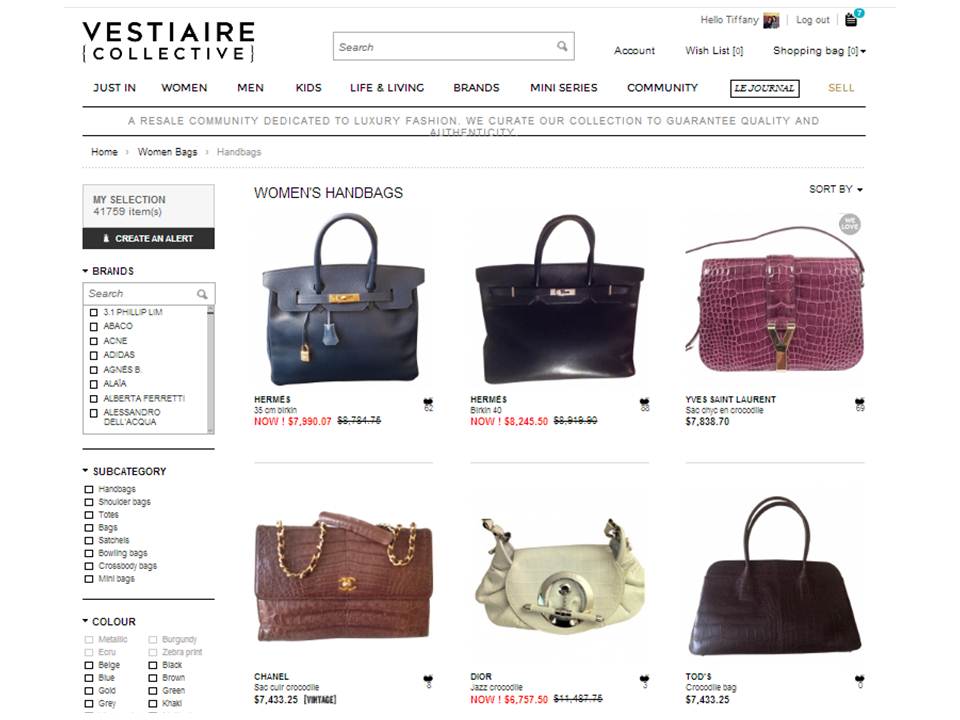
There are a few things setting apart some of the existing online consignment sites from the others.  The most obvious is visual design.  An effective visual design is simple and helps the user easily navigate the site.  The ease of browsing, filtering options and presentation of products on a page are essential to the user’s experience (Check out Vestiaire’s).
vestiairevestiaire2

And if you’ve read my previous posts, you already know what I’m about to say next…Yes, the need for sharing features that provide an engaging, real-time social experience for the users  (I also discuss this in Like Prada, Repin Prada then Shop Prada).  For example, Threadflip allows its users to share its products on Facebook, Twitter and Pinterest as well as comment or “love” the product.  Users are also able to follow sellers.  These features transform the marketplace into a community.

threadflip

Poshmark’s Posh Parties take an innovative approach to providing its users an engaging, real-time social experience while shopping.  Posh Parties are virtual buying and selling parties.  To give you a better idea, it is similar to Gilt in that it features products under a specific category or brand for users to shop.  Digital curation makes it easy for users to shop online because it provides for an easy way to navigate through items that the individual likes or doesn’t like.  The “parties” are organized by Poshmark users or hosts and are posted in real-time.

These Posh parties create a sense of curiosity and urgency with its users, bringing them back to check on upcoming parties (every party is different and are created every day) and possible brands or categories that they like.  Posh parties also increase user activity for sellers as sellers look to collaborate with other sellers to sell more of their items and create new categories to attract buyers.  Moreover, parties increase visibility of products compared to a single product that will most likely be lost in the feed.

photo 1 photo 2

Finally, there must be an app for the site.  Individuals need to be able to access the site from their phones and tablets so that they are able to check for their favorite products and brands and compare prices at any time.  So much of the buying on these sites are driven by impulsive behavior (I can confirm this); therefore, it only makes sense to find a trigger for that behavior…

Check out a few of the leaders in this market who have successfully met the challenges discussed above.

Poshmark

poshmark

Poshmark received $12M Series B last year led by new investor Menlo Ventures, bringing the total amount invested in Poshmark to $15.5 million since 2011.  Poshmark has been focused on expanding its mobile fashion marketplace beyond iOS.  On iOS devices alone in the United States, it has ~250,000 women with active personal “boutiques” to sell items of their own closets and more than 1 million items have been sold on Poshmark since the start of this year.

Vaunte
vaunte1vaunte2

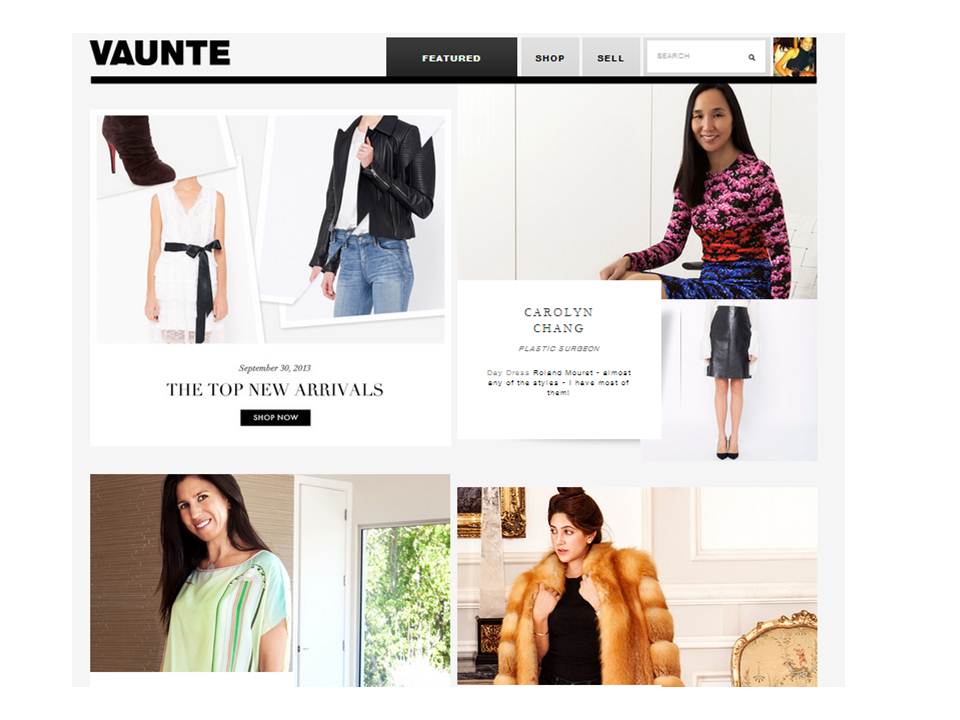
Vaunte is a luxury consignment platform with a fashion editorial element.  The site features celebrities, designers and socialities and allows its users to shop various products from those individuals’ closets.  Vaunte takes a 30% commission for photographing and shipping seller’s items.

Vaunte has also expanded to provide new items and is looking to grow its consignment platform to include “non-starlet” users.

I also talked a little more about Vaunte in my previous post Like Prada, Repin Prada then Shop Prada.

Vestiaire

vestiaire

Vestiaire Collective was launched in 2009 as a place for consumers to buy and sell pre-owned, authentic luxury goods.  Currently, the site has a network of approximately 1.5 million members worldwide and has a number of product categories such as women, men, kids and life and living.

Condé Nast announced at the beginning of this month a $20 million investment in Vestiaire Collective.

Threadflip

threadflip

Threadflip boasts that its sellers make between $400 to $2,200 a month.  Threadflip takes a 20% cut on all transactions and 40% on its White Glove transactions.  The White Glove service involves Threadflip helping assess, professionally photography and post the seller’s product on the site.  The service also handles shipping and customer service.  The average White Glove seller makes approximately $500 per shipment.

Threadflip has raised $8.1 million in seed funding from First Round Capital, Baseline Ventures, with participation from Dave Morin, Forerunner Ventures, Greylock Discovery Fund, and Andreessen Horowitz Seed Fund.

The RealReal

therealreal

As of the first quarter of 2013, The RealReal was growing by 1.5 million visitors a month and had about 750,000 members.  The company also shipped more than 20,000 luxury items to customers and was growing by 20 percent month over month.  The average consigner at the RealReal, meanwhile, is raking in about $6,000 a year.

In April, the online shop raised $14 million in a Series B round of funding.


Most importantly, check out Tom Haverford’s (from tv show Parks and Recreation) Rent-A-Swag!  If you haven’t seen the episode (Season 5, Episode 6) or the show already and are dying for a good laugh, check it out.  Here’s an awesome clip from the episode: http://www.youtube.com/watch?v=DBcgtEW3KCk


Share with me your thoughts on online luxury consignment @tiffanydstone or comment below!


Sources: http://techcrunch.com/2011/06/15/google-ventures-backed-copious-launches-a-social-marketplace-for-the-facebook-era/http://techcrunch.com/2012/12/04/poshmark-nabs-12m-series-b-led-by-menlo-ventures-to-expand-its-mobile-fashion-marketplace-beyond-ios/http://venturebeat.com/2013/08/01/threadflip-gets-more-social-to-sell-the-billions-of-dollars-hiding-in-womens-closets/http://techcrunch.com/2013/09/22/poshmark-growth-downloads-sales/http://www.betakit.com/27perry-launches-consignment-marketplace-to-bring-local-merchandise-online/http://www.bizjournals.com/sanfrancisco/blog/2013/08/threadflip-online-consigners-chase.html?page=allhttp://www.luxurydaily.com/conde-nast-invests-20m-in-online-luxury-resale-site/, First Research, NART

Turn the Page to Etsy Pages

A few blog posts later… we have Etsy Pages!  In my “Like Prada, Repin Prada then Shop Prada” post I had discussed the need to allow users to be able to follow, collect, share, compare and shop all in one eCommerce platform.  It’s exciting to see a personalized eCommerce website fully integrate these functionalities.  Etsy Pages, having only launched this week, is already a step forward from Pinterest Product Pins and Amazon Collections.  See below for a glimpse of Etsy Pages:

Home Page

Etsy Pages

News Feed

Etsy Feed

Food Pages

Etsy Pages 2

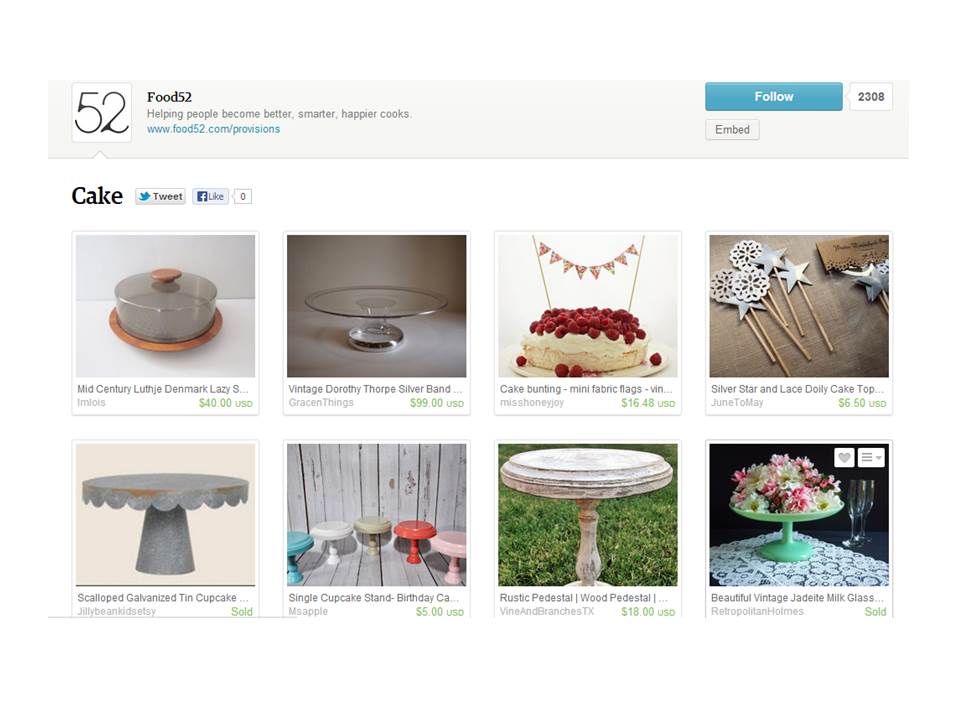
Cake Related Products For Sale by Etsy Users

Etsy Pages 3

An Overview of Etsy

Etsy, launched in June 2005, is an e-commerce website that allows its users to buy handmade or vintage goods as well as establish their own online shops to sell their handmade products.  The company charges users a flat listing fee (of 20 cents per items), and takes a commission of 3.5% off all items sold.

As of this August, Etsy had a 44.2% increase in items sold and a 43.2% increase in dollars of goods sold compared to last year.

The stats:

  • $109.1 million of goods (after refunds and cancellations) were sold by our community in August, 8.13% higher than July
  • That represents 5,483,399 items sold for the month, 9.44% higher than July
  • 2,804,300 new items were listed in the month, 3.46% higher than July
  • 1,065,767 new members joined the Etsy community, 6.13% higher than July
  • 1.8 billion page views were recorded on the site in August (including web and apps)

[For the full August report see here]

In 2012, Etsy reported a 70% increase in sales compared to 2011, totaling $895.1 million in gross merchandise, and a 83% growth in the business to include buyers from 200 countries.  Etsy currently lists 18 million items for sale and sees 60 million unique visitors each month.

Etsy Pages

Just like Pinterest, Etsy buyers are able to create their own collections (Pinterest calls them boards), but Etsy also allows its users to shop the items in their collections.  Now this, I LIKE!  Just as startup online fashion sites allow their users to instantly shop clothing and accessories featured in their online fashion editorials, Etsy provides a one-stop shopping experience for its users through its pages.  There’s clearly a trend here…

Etsy Pages allows its users to favorite a product and follow a seller’s shop or a brand, in which they can receive tailored product recommendations.  Etsy has collaborated with brands such as Apartment Therapy, Lucky, West Elm, Martha Stewart Weddings, Swiss Miss, Food52, and Babble to add pages to a designated section of the marketplace that displays recommended products from these brands.  Etsy has also recently partnered with Nordstroms to feature a wedding collection from emerging artists and designers.  Additionally, individuals can subscribe to receive editors’ top picked items.  Yes, Etsy has picked a fight with Pinterest!

Some may question how Etsy will be able to steal the 70 million pinners from Pinterest.  Pinterest may have more than two times Etsy’s users, but what most people don’t know is that Google and Etsy are two of the most popular sites pinned and that DIY & Crafts (the primary focus of Etsy) is the second leading pinned category after Food & Drinks.  So is Etsy really stealing pinners or are they bringing home users and shoppers?

Pinterest popular pins

Pages will allow sellers to easily gain more visibility as people browse their Etsy feeds, re-post products and share their collections.  An interesting statistic from Pinterest that speaks to the optimistic future of Etsy Pages is that over 80% of pins on Pinterest are actually re-pins rather than brand new content.  This type of user activity will be key to brands as they choose their preferred selling platform.

power-of-pinterest-infographic

And as previously mentioned, Etsy Pages creates an incentive for buyers to relocate their presence from Pinterest to Etsy as users are able to shop instantly the products displayed and buyers are able to easily expand their presence through re-posts and followers.  Etsy’s most valuable proposition may be that it allows its users to shop every product in their collection.  It will be difficult and might I even say impossible for Pinterest to achieve this as many of its pins are pictures from blogs or unshoppable sites.  And although Amazon Collections also allows its users to shop every product displayed, it lacks the social and personalized experience that Etsy provides (Also discussed in my “Like Prada, Repin Prada then Shop Prada” post).  Amazon Collections appears more as an online warehouse, while Etsy Pages’ News Feed, like Pinterests’, is engaging and is updated in real-time with new recommended products from brands, Etsy’s sellers & buyers and friends.

I envision that in the next few months, Etsy will expand its categories to include areas that are currently covered by Pinterest but not on Etsy Pages (current Page categories include weddings, fashion, kids, design and lifestyle) and will partner with more retailers and well-known designers to add to its collection of brand pages.  I don’t see Etsy digressing away from its focus on handmade goods, rather I see it building upon its original concept and introducing more brands and relevant products to its users.  I believe Etsy will continue to create an online discovery experience for its users, introducing not only emerging artists and designers but also more popular brands and individuals.  We can also expect an increase in the number of sellers or new personal shops on Etsy as the Pages’ user base grows.  Etsy Pages will enable Etsy to quickly increase its user reach and grow its sales.

“To launch Pages, we’ve hand-selected brands and bloggers who celebrate Etsy’s items and makers, and boast strong editorial chops when it comes to curating for their audiences. With a mix of perspectives — from home decor, kids, weddings and more — and a global spread, we’re excited to kick off Pages with such a talented group! As they grow their following on Etsy, the partners will also help spread awareness of our unique marketplace by using Pages’ tools to post their curation to their own communities. And we’re excited to continue to add new Pages in the coming months.”  —Etsy Blog

Share with me your thoughts on Etsy Pages and eCommerce Platforms @tiffanydstone or comment below!


Sources: http://www.etsy.com/http://techcrunch.com/2013/09/17/etsy-debuts-pinterest-like-curation-platform-for-brands-pages/http://gigaom.com/2013/09/17/etsy-takes-a-cue-from-pinterest-with-new-curation-feature-for-brands-and-bloggers/http://upstart.bizjournals.com/companies/rebel-brands/2013/09/17/etsy-launches-curation-platform.htmlhttp://www.babble.com/mom/10-pinteresting-pinterest-stats/popular-pins/

Takeaways From Decoded Fashion Meetup: Hot Tech Connecting Shoppers Offline & Online

Last Thursday, I attended the Decoded Fashion Meetup: Hot Tech Connecting Shoppers Offline & Online event.  This was a great event with a huge turnout, and I was excited to meet individuals with all types of backgrounds, from a developer interested in cosmetic startups to a VC at Greycroft Partners.

Startups featured at the event:

Nomi – Nomi is a real-time marketing optimization platform that lets retailers track and analyze customer data across multiple channels, including in-store, online and mobile.  Nomi utilizes Wi-Fi signals on smartphones to  track  the duration and frequency of shoppers in a store as well as other metrics such as conversion rates, device type and revenue by location.  Below is a snapshot of the Nomi dashboard:

Nomi Dashboard

Styloola – provides a mobile solution to help shoppers navigate the streets in search of the perfect item nearby. Its founder will be revealing a hardware-based solution launching in Q4.

Shopkick – is an app that lets users search for products and find discounts at retail locations.  Shopkick allows its users to redeem “kicks” or points for walking into a store and then use those kicks to redeem different rewards. You can get restaurant vouchers, iTunes gift cards, Best Buy, Target, Macy’s, Sports Authority or American Eagle gift cards, movie tickets, or even a cruise around the world. You can also donate them to your favorite cause.  The startup also launched in-app purchases, starting with 30 major stores, including Target, Macy’s, Best Buy, Old Navy and Anthropologie.

Snapette – a mobile shopping tool to help shoppers find designer fashion currently in stores near them.  Snapette has previously worked with Jimmy Choo to send push notifications to its users about a nearby sample sale.  The company announced this month the acquisition by PriceGrabber.

Snapette

Summary of Takeaways:

-Omni-channel

-In-store metrics

-Effective online to offline retail strategy

Omni-channel

Omni-channel retailing allows the user to utilize all shopping channels, including physical, online and mobile channels, simultaneously to shop anything, anywhere and anytime.  The omni-channel approach evolved as a solution to showrooming, which involves consumers browsing products in a physical store and comparing product prices, inventory availability and reviews online via a mobile device/tablet/computer.  Showrooming resulted in product purchases outside of the physical stores and from another retailer or online retailer with a lower price.  Omni-channel aims to create consistency in selling across all channels and increase the interaction between stores and consumers.

Ideally, omni-channel will allow the retailer to communicate with the consumer at every point in the shopping experience, from the time of product research to the point of transaction and even after the transaction.  For example, a customer would view the company’s lookbook online at home and receive a notification on their phone about the latest promotion offer and will walk into the store to redeem the offer at the time of purchase.  This approach centralizes the customer as depicted in the below diagram.

Omni-Channel-Diagram-640x206

The challenge with omni-channel retailing is the ability to integrate and analyze data collected at different points of interaction with the customer and use this data to communicate information and provide services relevant to the customer’s preferences.  Additionally, new metrics focused on measuring customer behavior (i.e. visit duration, store zone popularity and bounce rate) will have to be adopted as the traditional Four-Wall Analysis cannot be used to understand individual consumer behaviors, and therefore will not be useful in helping retailers create a personalized shopping experience for their customers.  Adoption of the omni-channel approach will also require retailers to achieve the convergence of the physical and digital worlds through consistency in pricing, policies and fees, promotional offers, inventory availability and customer experience.  Channel-specific coupons and inconsistencies in product descriptions will encourage customers to prioritize where they will purchase goods, resulting in showrooming.

Effective Online to Offline Strategies

Today, we are seeing many online-originated businesses open up their own brick-and-mortar stores.  The most popular example has been Warby Parker.  Warby Parker is an online eyewear retailer that allows its customers to sign up and shop online for stylish frames, receive free home try-on kits and purchase the frames on the website.  This past year, the company has opened showrooms and stores in various cities across the United States.  The same frames are also offered in the Warby Parker stores, where Warby Parker representatives are on-site with iPads to help process your purchase instantly.  Its stores are also distribution centers.  The consistency in experience, pricing, branding and offerings has allowed Warby Parker to successfully execute its online to offline strategy.

l

Other Examples: Apple, Jo-Ann Fabric, Restoration Hardware, Walmart, Macy’s

By the Numbers

  • More than 60 percent of consumers who like to interact with brands do so through multiple channels
  • US online retail is expected to reach $262 billion in 2013 and grow to $370 billion by 2017
  • Three-quarters of U.S. Internet users research grocery and personal care products online
  • Over 80 percent of shoppers make their purchase decision before leaving their home
  • Over 50 percent of smartphone owners use the device while in stores to guide their purchases

Lookout For:

-In-store Wi-Fi

-Pop-Up shops: a temporary store ro event

-POS systems for omni-channel


Share with me your thoughts on omni-channel retailing/online-to-offline strategies @tiffanydstone or comment below!


Sources: http://www.forbes.com/sites/maribellopez/2012/10/22/can-omni-channel-retail-combat-showrooming/http://maosuit.com/stores/omi-channel-retail-101/, Rising to the Omni-Channel Challenge-August 2013

World Economic Forum Technology Pioneers 2014

Below are the 36 companies selected for the World Economic Forum’s Technology Pioneers 2014.

Energy and Environment

Advantix Systems
Alphabet Energy Inc.
Bug Agentes Biológicos
EcoNation
Kebony AS
Nest Labs Inc.
Oasys Water Inc.
OMC Power
SunPartner
WiTricity Corporation

Information Technologies and New Media

Adtelligence GmbH
Airbnb
AppNexus Inc.
Codecademy
Coursera Inc.
Data4
Dnevnik.ru
GitHub
Jana
Kaggle Inc.
Koemei SA
Lenddo
LiveU Ltd.
Rethink Robotics
TruTag Technologies Inc.
Viki Inc

Life Sciences and Health

Agios Pharmaceuticals Inc.
BIND Therapeutics Inc.
bluebird bio
Cyberdyne Inc.
D-Rev: Design Revolution
Foundation Medicine Inc.
Natera
Second Sight Medical Products Inc.
Selecta Biosciences Inc.
SynTouch LLC

[The full report]

The Fastpass of Dining – Waitlisting Management Apps

Your Saturday night dinner could be waiting for you instead of you waiting on it.

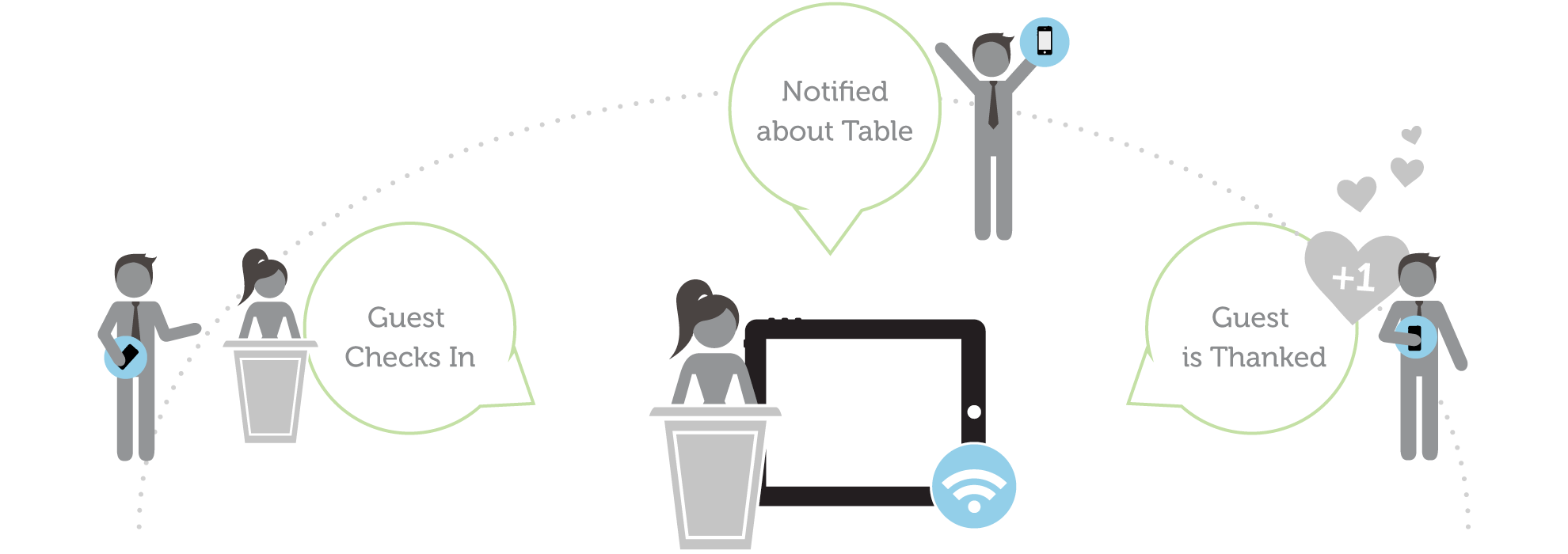
experience

In the past few years, a number of mobile waitlisting management services have emerged to improve the waiting time experience, including NoWait, buzztable, quickcue, NoshList, Table’s Ready and QLess.  These applications are focused on helping restaurants increase revenue in 3 ways:

  1. Seat more guests
  2. Collect more customer data
  3. Improve customer experience

The idea behind these apps is simple: you enter a restaurant and submit your name and number to the host, you receive text message updates on the status of your waiting time (some apps also allow you to view the number of parties ahead of you on your smartphones) and you are notified when your table is ready.

“Customers get a more enjoyable experience with real-time information so they can wait where they want and still go to the restaurants they want to.” –Robb Myer, President & Chief Product Officer at NoWait

buzz

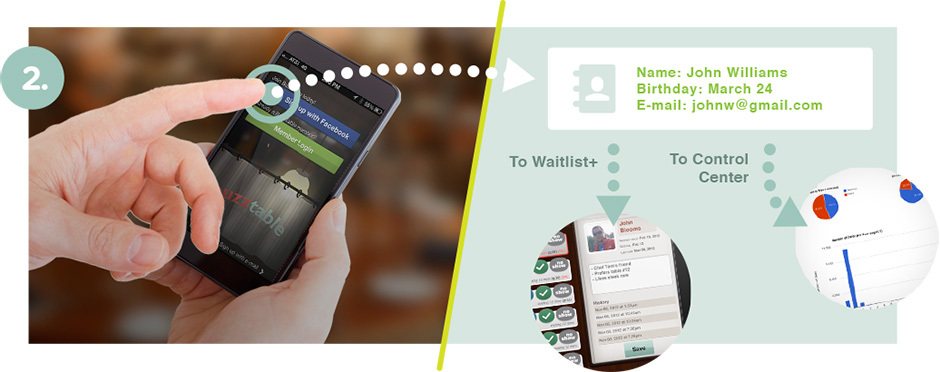
The apps not only provide wait time notifications and management, but also allow restaurants to engage with customers via e-mail or text message and utilize customer data to track performance and customer retention.  For example, BuzzTable automatically creates a guest profile for each customer upon submitting his or her name and number, helping the restaurant track the individual’s dining history, birthday and customer preferences.  The marketing features allow restaurants to share promotions, coupons and create custom retention rewards.  Some other features include allowing customers to invite friends to the guest list or create a party and share their restaurant check-in on Facebook.

howitworks_step5

loyalty-tab

One study found that letting customers use their cell phones to be notified instead of coaster pagers resulted in 9.1 percent fewer turn-aways.  Coaster pagers are also expensive and start at $50-$100 per pager (LRS sells a 15-pager kit for $928).  Additionally, the cost for replacement or repairment of a pager can range from $70-$100 per pager.  It is not uncommon for pagers to be lost or stolen as reported by many restaurants.  Therefore, not only are fixed startup costs reduced for a waitlist management system, but also the maintenance costs required to replace or repair pagers.

Comparison of Startup Costs:

Restaurant Pagers: $2000 – $6000 (according to Foodservice.com)

Waitlist app: $0 – $1200 (range based on required iPads or computers)

*QLess offers to even purchase the old pager system from the restaurant and apply its current value to its QLess bills.

**The apps make money by charging restaurants a platform fee to manage their guests with costs ranging from ~$49-$200 per month depending on the selected plan.  For example, NoWait offers three plans for restaurants based on the number of parties a month: free for 200 parties, $114 a month for 1,200 parties and $199 a month for 2,500 parties.

With over 37 billion hours of time lost domestically every year waiting in line, these mobile waitlist management applications are providing a cost-efficient solution to help increase customer retention, create a 2-way communication channel between the restaurant and its customer and improve the wait time experience.  Although restaurants have been the main target for these apps, it will only be a matter of time for these waitlisting management apps to appear at hospitals, pharmacies, the DMV, car washes, amusement parks and other places where long wait times are common.

Threats to Consider

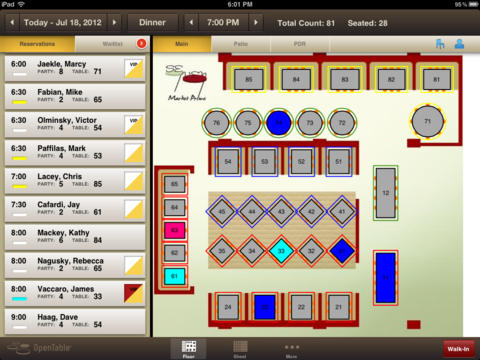
It has been argued that the market for NoWait is considerably larger than that of OpenTable’s (OpenTable offers an electronic reservation book for users to make restaurant reservations online).  A recent article stated that there are 270,000 casual dining restaurants that NoWait targets compared to the 35,000 fine dining restaurants OpenTable serves.  However, OpenTable has been quick to launch its own Table Management App that enables restaurants to manage their reservations and tables in sync with their OpenTable Electronic Reservation Book.  OpenTable’s market dominance and ability to offer both online reservations and waitlist management for restaurants without reservations poses a significant threat to any recent waitlist management apps.  Additionally, OpenTable’s recent partnership with Facebook adds to the social experience of the app, allowing users to share their restaurant visit or reserve on Facebook.  OpenTable already offers many of the features that waitlist management apps provide, stripping away uniqueness and competitive advantage.

OpenTable Table Management App:

opentable floor opentable floor2

Case Study

There have been many case studies performed to prove the effectiveness of mobile waitlist notifications.  Below is a summary of one performed by Buzztable on Penelope, a restaurant in NY (and one of my favorite brunch spots!):

[For the full case study: http://www.buzztable.com/customers/penelope/]

The Challenges

-Over 25% of guests added to wait list ended up “walking away” due to 60+ minute waits

-Received an average of 12 guests complaints per week regarding long wait times

-Staff was reluctant to change their previous wait list system

-Limited data on customers made it difficult to identify repeat customers

The Objectives

-Increase revenue by decreasing walk-aways and canceled tables

-Increase guest experience and overall satisfaction during wait time

-Achieve instant staff buy-in with minimal integration, training and upkeep

-Collect customer data and easily display to staff for improved practices

The Solution: BuzzTable

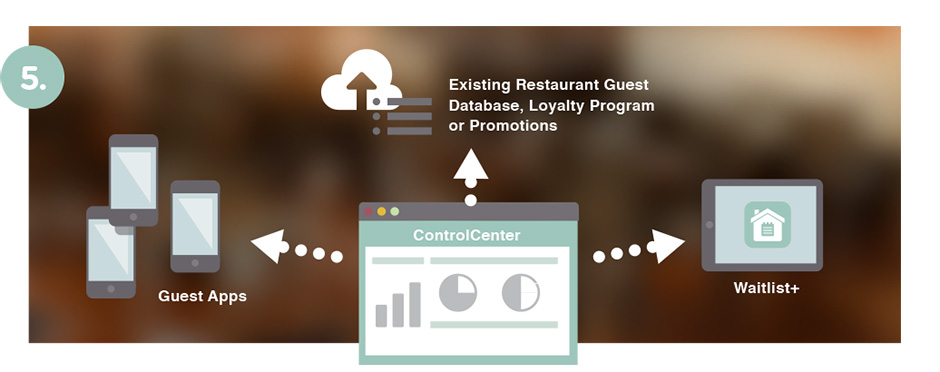
Wait List Management: BuzzTable provided Penelope with their WaitList+ platform, consisting of 3 parts: 1) an iPad-based Wait List Management application that allows hosts to greet and notify their guests with SMS-messaging and collect/store guest information; guests are then prompted to download 2) BuzzTable’s Consumer Mobile App (free for iPhone & Android) which gives customers the ability to check their wait list progress, browse top trending dishes with photos, unlock rewards, and provide private feedback; and 3) E-mail reports (sent daily and/or weekly) which send all collected data directly to the restaurant.

Custom Account Settings: Penelope’s account was created in roughly 15 minutes, which included custom text messages to match their brand, custom status colors on the WaitList interface, plus unique loyalty rewards, high-res photos of their top dishes, and custom feedback fields within the BuzzTable Consumer Mobile App.

5-minute Training: Penelope’s hosts were fully trained on the system in less than 5 minutes. This gave them confidence to use the system in a live environment immediately following training.

The Results

-28% Decrease in Walk-aways = $27,500 of incremental revenue over 60-day period (at an average guest check of $25 per person)

-1,101 additional seated guests

-Decreased Guest Complaints by 66%

-100% Approval Rating from Staff

Value-Add

-3,800+ Unique Customer Profiles Created (BuzzTable enabled FOH staff to identify repeat guests and VIPs. Of the 3,800+ guests, more than 700 enrolled into Penelope’s mobile loyalty program directly through the BuzzTable app. This opt-in process delivered email, birthday, Facebook and other key info on guests to the restaurant.)

-110+ Facebook Engagements = 4,100+ News Feed Impressions

-90% of Guests Agree BuzzTable is a “Big Improvement”

-Guest App Retains 45% More Guests (Guests who downloaded BuzzTable’s Mobile Consumer App are 45% more likely to be seated (not walk-away or cancel) than other guests.)

Share with me your thoughts on waitlisting management apps @tiffanydstone or comment below!

Sources: http://www.buzztable.com/http://qless.com/industries/restaurants/http://www.crunchbase.com/company/nowait#ixzz2d5D6GpLmhttp://www.benzinga.com/success-stories/13/08/3852548/pittsburgh-startup-nowait-could-overtake-opentables-volume-in-2014#ixzz2d5IYwrJEhttp://www.benzinga.com/success-stories/13/08/3852548/pittsburgh-startup-nowait-could-overtake-opentables-volume-in-2014#ixzz2d5IVeWdjhttp://techcrunch.com/2012/08/28/death-to-the-restaurant-buzzer-nowait-raises-2-million-for-ios-app-waitlisting-system/http://www.sfgate.com/business/press-releases/article/NoWait-Seats-16-Million-Diners-on-Par-to-Surpass-4727191.phphttp://thenextweb.com/insider/2013/05/01/bing-fund-invests-in-buzztable-an-app-that-tracks-when-youll-be-seated-at-your-favorite-restaurant/http://www.foodservice.com/articles/show.cfm?contentid=15701&title=Restaurant%20Text%20Pager%20Systems%20and%20Cell%20Phone%20Pager%20Systems%20-%20A%20Cost%20Benefit%20Analysishttp://www.tablesready.com/pricing.php