Lessons Learned from the History of Car Sharing

car2go-Amsterdam_1

A Quick History Lesson on Car Sharing

Car sharing is an alternative to car ownership and car rental, in which local users are able to access a network of vehicles in a city and rent the vehicles by the minute, hour, day, or purchase a monthly or annual-access membership plan.  Car sharing is intended to provide a solution to transportation and environmental issues.   Car sharing is not a new concept.  In fact, car sharing began in 1948 with a cooperative in Zurich, Switzerland known as “Sefage” (Selbstfahrergemeinschaft).  The idea was simple: if you can’t afford to purchase a car, share one.  Many other shared car experiments were attempted but were unable to grow large enough to sustain.  These later efforts include: “Procotip” (France, 1971 to 1973), “Witkar” (Amsterdam, 1974 to 1988), “Green Cars” (Britain, 1977 to 1984), and Sweden’s “Bilpoolen” (Lund, 1976 to 1979), “Vivallabil” (Orebro, 1983 to 1998), and a “bilkooperativ” (Gothenburg, 1985 to 1990).  Procotip used in-vehicle “meters” fed by tokens to enable members to pay for usage by distance.  Witkar used electric vehicles and limited its users to the city center.

The first wave of car sharing programs all survived for only a short period of time.   Their failures were observed to be the result of poor financial management and planning, inadequate marketing, lack of support from local governments and the small scale of the projects.  The car sharing model succeeds when both customer convenience and high vehicle utilization is achieved.

The second wave of car sharing emerged in the late 1980s and early 1990s.  In 1987, two car sharing cooperatives, ATG Auto Teilet Genossenschaft and ShareCom, were founded in Switzerland and would later merge in 1997 to form Mobility Carsharing Switzerland.  ATG began as an informal car sharing system that was motivated by the idea of satisfying the need for a car without actually having to own one.  In contrast, ShareCom expanded its offerings to not only share cars, but also share homes, tools and other goods.  ShareCom aimed to establish a communal system with its members.  Around the same time, in 1988, StattAuto Berlin was started as part of a university research to demonstrate the potential of car sharing as a transportation alternative in Germany.  In the first few years after its founding, StattAuto experienced 50 percent YOY growth, but this growth did not sustain when Berlin citizens began to expand beyond the city into areas where public transit was limited and realized the infrequency of their use of the program.  Others cancelled their membership because they found it more convenient to own a car than continuously reserve a shared car.  As a result, declining memberships and the high costs of maintaining the program led to an unprofitable business.  The reasons that caused the declining growth of car sharing for StattAuto were the same reasons for the many other failed car sharing programs that would follow.

It wasn’t until the 1980s that car sharing was introduced in the U.S.  Car sharing began in the U.S. with two experiments: Mobility Enterprise (1983 to 1986) and the Short-Term Auto Rental Service (STAR) (1983 to 1985).  The Mobility Enterprise program was run by Purdue University researches and was aimed to encourage the use of smaller, fuel-efficient cars and to reduce the need for additional vehicles.  STAR was established as a demonstration project by a private firm in San Francisco that served residents of a large apartment complex near San Francisco State University (Doherty, Sparrow & Sinha, 1987).

Carsharing Portland also began as an informal car sharing system, involving one car and a few neighbors.  It is recognized as the first official car sharing operation in the United States. Shortly after Carsharing Portland’s founding in 1998, Flexcar and Zipcar were started.  These programs were all station-based, in which vehicles are located at a designated location for users to pick-up and drop-off the cars.  In 2001, Flexcar acquired Carsharing Portland and in 2007, Flexcar and Zipcar merged.  And most recently, Zipcar was acquired by Avis for about $500 million at $12.25 a share, a 32% discount to Zipcar’s $18 IPO price.  Zipcar hadn’t turned an annual profit since its founding and as of September 2012, only had two month’s operating cash on hand.  The high fixed costs of fleet operations, including lease expense, depreciation, parking cost, fuel costs, insurance, gain or loss on disposal of vehicles, accidents, repairs and maintenance as well as employee-related costs, squeeze the margins of the business.  PhillyCarShare, acquired by Enterprise Holdings in 2011, also found itself in financial trouble with a debt of approximately $2.7 million.  Additionally, the need for rapid expansion to gain first-mover advantage and grow the customer base requires significant investments in vehicles and parking.  And especially in densely populated cities where membership growth is most promising, parking is scarce and expensive.

To be profitable, station-based car sharing companies will need to achieve economies of scale in a highly competitive environment, but the low barriers to entry in this business, which puts downward pressure on prices, and the required investments to grow the business make it challenging for these companies to achieve profitability.  Between 1997 and 2009, there were 34 car sharing programs launched and 15 program closures in the United States, yielding almost a 50 percent closure rate.

530306-car2go-car-sharing-company-comes-to-canada.1-lg

Lessons Learned and the Future of Car Sharing

Fortunately for car sharing, history won’t repeat itself.  Today, there are more than 2 million members worldwide in car sharing programs and membership is expected to reach over 12 million by 2020.  A large part of this growth can be attributed to the changing attitudes and lifestyles of individuals, but even more influential are the technology and infrastructures that have made car sharing more convenient and available to individuals.

In the past, many car sharing programs were founded through university research, subsidized by the government or started as a small, private company.  As previously mentioned, these car sharing programs struggled to survive independently.  Today, through acquisitions by large rental car companies, many car sharing programs are able to continue to operate and expand its business despite the challenging margins by leveraging the infrastructure and resources of its parent company.  For example, Avis’ acquisition of Zipcar has helped Zipcar create a presence at airports and will allow it to break into the international car sharing market.  Rental car companies are also able to create a new revenue stream and grow their customer base to include short-distance or short-term rentals through the car sharing programs.  Many car manufacturers have also been successful in launching their own car sharing programs such as Daimler’s car2go and BMW’s DriveNow.  As of May 2013, Car2go operates over 7,300 vehicles, which serve seven countries and 20 cities worldwide with over 375,000 customers.  This March, Ford also started its own Ford2Go in Germany.

Technology is transforming the car sharing system by helping decrease some of the fixed costs per vehicle and attracting more customers to the concept.  The traditional station-based car sharing system has been reinvented to the one-way or free-floating car sharing system.  One-way rentals allow users to drive the vehicles anywhere within the operating zone and leave the vehicle in any legal public parking space rather than having to return the vehicle to the original location of rental.  Additionally, users pick up cars parked nearest to them by finding an available vehicle with the internet or smartphone app.  These technology solutions are attractive because they rid the high parking costs and inconvenience of having to pick-up and drop-off cars at a specific location.

New technologies, a growing interest and improved operational efficiencies suggest the future of car sharing is promising.  As of January 1, 2013, there were 46 active car sharing programs in North America with 1,033,564 members sharing 15,603 vehicles.

Share with me your thoughts on car sharing @tiffanydstone or comment below!

Sources: http://www.carsharing.net/library/North-American-Carsharing.pdfhttp://www.economist.com/blogs/babbage/2013/05/car-sharing-serviceshttp://tsrc.berkeley.edu/sites/tsrc.berkeley.edu/files/A%20Short%20History%20of%20Carsharing%20in%20the%2090s.pdfhttp://www.portlandoregon.gov/transportation/article/370287http://www.nytimes.com/2013/06/26/business/global/one-way-car-sharing-gains-momentum.html?pagewanted=all&_r=0http://onlinepubs.trb.org/onlinepubs/tcrp/tcrp_rpt_108.pdfhttp://carsharingus.blogspot.com/http://en.wikipedia.org/wiki/Car2Go
DRYNC Today and Remember It Tomorrow

The problem: identifying or remembering a favorite wine at a restaurant, dinner party, wine tasting tour or event.

The solution: DRYNC

DRYNC is a mobile application that enables it customers to identify and purchase the wine they are drinking by scanning a wine label using the phone’s camera or searching a location or event to browse its wine list.  The app currently identifies more than 1.7 million varieties of wine and offers approximately 30,000 wines that can be shipped to customers in 41 states.

So far, DRYNC has raised $900,000 from angel investors including Mark Hastings, Andrew Moss, and Jack Remondi.  Founder Brad Rosen has built and sold companies to Phillips, Motorola, and Cisco, among others and co-founder Bill Kirtley previously worked at Apple on the Safari and Calendar products.

How DRYNC works:

1. Take a snapshot of the wine label with your phone’s camera

Drync picture

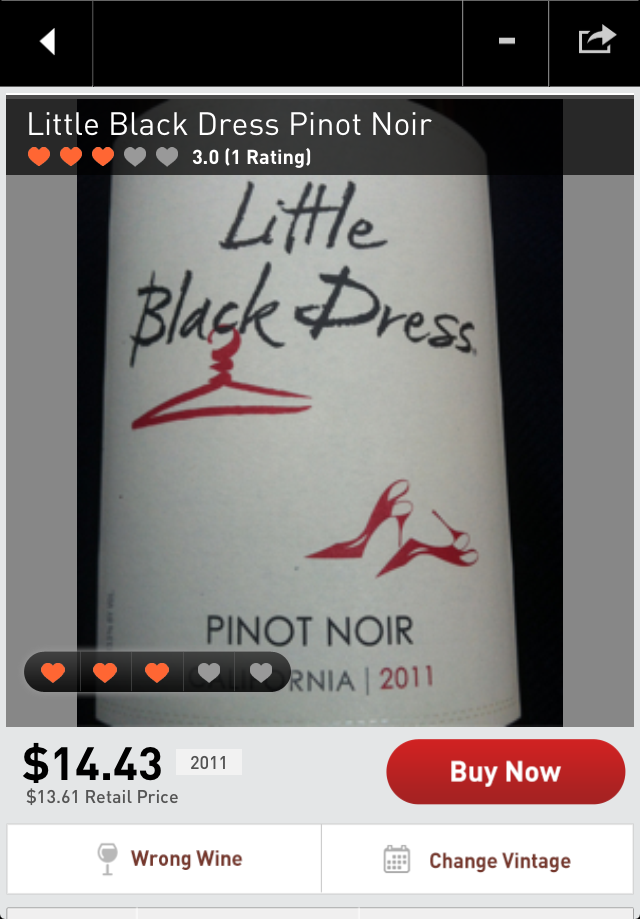
2. Confirm identification of wine and rate it/take notes on it/add it to your wishlist (If wrong wine is identified, select “Wrong Wine” icon and select the correct wine from the list.  If wrong vintage, select correct vintage from “Change Vintage” list.)

Below is a snapshot of the wine my friends and I had at our picnic this Saturday!

Drync Little Black Dress

Saved wines:

Drync wine list

3. Share wine with others via twitter, facebook, e-mail or text

Drync Share

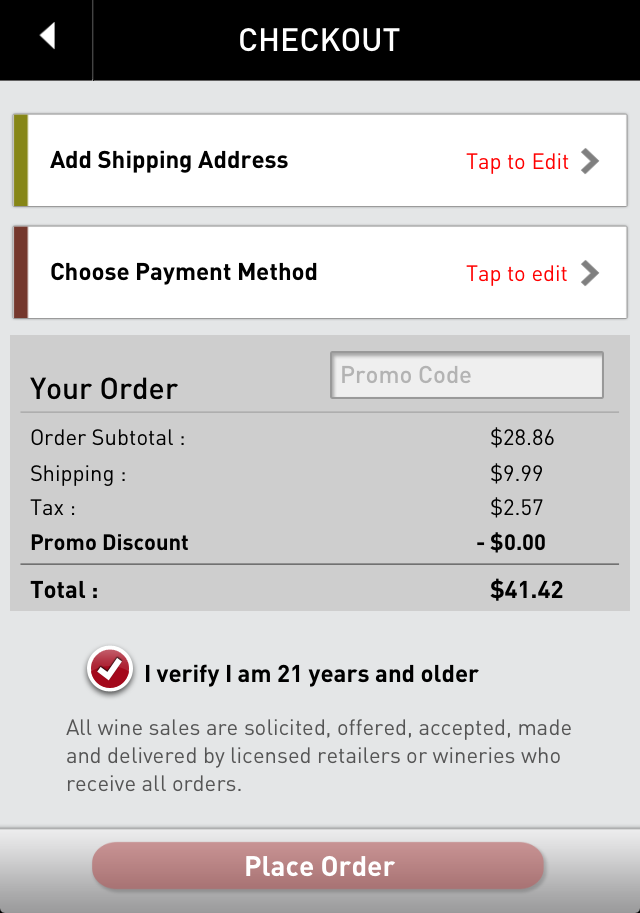
4. Purchase wine

Drync purchase 2

DRYNC utilizes card.io to simplify the payment process.  Customers are able to input their credit card information by taking a snapshot of their credit card using their phone’s camera.

Drync payment

Why DRYNC?

“We are focused on mobile wine commerce, enabling people to buy the wines they like at the moment they try them with their iPhone. We think of it as a Shazam or SoundHound for wine. Other players in the space create social networks for wine, give people ways to log the wines they drink, offer wine pairings, or provide generic or limited selections of wines to order online.” -Founder Brad Rosen

Similar to DRYNC, Vivino allows its users to snap photos of wine labels using its mobile app on their smartphones and the images are then matched against a database of 1.3 million wines to return the respective wine’s producer, brand, name, varietals and vintage.  At the end of March this year, Vivino exceeded 1 million downloads and in June reported that 15 million images of wine labels have been scanned.  Vivino experiences rapid growth with approximately 2 million scans of wine labels each month.  Additionally, Vivino recently received $10.3 million in Series A funding led by Balderton Capital, bringing its total capital raised to $12.4 million.

Although Vivino is argued to be the most downloaded wine app in the world and has been successful with building a platform to allow users to explore, identify, save and share wines, it does not allow users to purchase the wines they’ve liked and saved as DRYNC does.  Other mobile wine apps, such as Cor.kz, Snooth (only offers image-based search in its Pro version that costs $4.99), Hello Vino, Wine Notes and Swirl It, also do not offer the free one-stop shop experience – these wine apps are more focused on the social experience.  There are also wine apps that allow customers to purchase wines but lack the social experience for its users such as wine.com.  Although Vivino may pose a major threat to DRYNC with its potential to add the option of purchasing wines through its site, DRYNC enjoys the advantage of pioneering the mobile wine ecommerce space and is quickly capturing market share.  Wines purchased on DRYNC are fulfilled by existing distributors and retailers.  The app utilizes GPS to match the location of the customer with one of its wine suppliers, and if the wine is not available, the app recommends and offers to ship the user a similar one.  DRYNC takes only a marketing fee from each order (wineries are not charged to be listed on the app).  The company is not yet profitable but has seen revenues grow 40 percent each month.

DRYNC also offers curated wine lists (e.g. Spectator Daily Wine Picks, Coming up Roses, Crisp Light Wines, etc.) that help users discover new wines.  The wine lists create a more personal experience for the user by sharing wine recommendations from professional wine experts and allowing users to discover new wines based on their preferences or certain themes (e.g. the wedding season list suggest wines appropriate for wedding occasions).  DRYNC plans to eventually provide wine recommendations to its users based on a user’s price and taste preferences.  I think DRYNC could also enhance the wine discovery process for its members by providing recommendations based on the member’s previously liked wines (utilization of Big Data as discussed in my Beauty Army article!) and allowing its users to create their own wine lists and share them with their friends (similar to creating a playlist in Spotify and sharing it with friends who can follow your different playlists).

Drync wine lists

I believe DRYNC has successfully introduced technology to a customer’s wine discovery and shopping experience.

The Wine Market

In 2012, wine sales in the U.S. increased from the previous year to a new record of 360.1 million 9-liter cases with an estimated retail value of $34.6 billion.  The U.S. wine industry accounts for almost 8 percent of global wine production and has become the leading wine consuming region in the world.  According to wine industry consultant Jon Fredrikson of Gomberg, Fredrikson & AssociatesAmong, the key growth drivers are favorable demographics, a widening consumer base and increasing points of distribution in both on- and off-sale outlets.  Recent demand has been driven by younger consumers’ interest in lower-priced wines.  Technology has also helped attract new customers and introduced a new way to sell and distribute wine, contributing to the growth of the market.

About 160,000 new wines flood the market each year from 38,000 wineries worldwide.  The world wine market is highly fragmented with the three leading winemakers holding a little over 8 percent of the total market share in terms of volume combined.  The global wine industry is expected to generate almost $292 billion in 2014.

Share with me your thoughts on DRYNC or the future of mobile wine ecommerce @tiffanydstone or comment below!

Sources: http://www.crunchbase.com/company/drynchttp://www.fastcompany.com/3015748/fast-feed/the-shazam-for-wine-lets-you-buy-vino-by-snapping-its-label?partner=rss&utm_source=feedburner&utm_medium=feed&utm_campaign=Feed%3A+fastcompany%2Fheadlines+%28Fast+Company%29#4http://mashable.com/2013/08/14/drync-wine-app/http://techcrunch.com/2013/08/14/drync-a-wine-scanning-app-raises-900k-to-help-you-get-crunk/http://www.crunchbase.com/company/vivinohttp://www.balderton.com/news/wine-app-vivino-receives-1-3-million-in-follow-on-series-a-funding-580http://www.wineinstitute.org/resources/pressroom/04082013

3D Printing is the New Black

There has been a lot of discussion around 3D Printing this year as it evolves from a prototyping tool to a manufacturing solution and expands its presence into new industries.

What is 3D Printing?

3D printing, also called additive manufacturing, is the process of creating a three-dimensional solid object from a digital design.  The digital model is sliced into many layers (layers are thinly sliced, horizontal cross-sections of the future object) and descriptions of the slices are sent to the 3D printer to create the respective layers exactly to specification.  The layers are then combined in a number of ways to create a 3D object.

Main 3D Printer Technologies

Selective Laser Sintering (SLS) is the process of creating three-dimensional objects by fusing small particles of plastic, metal, ceramic, or glass powders using a laser.  The laser scans the cross-sections of the object generated from a CAD file or scan data and traces it onto the bed of powder.  The laser then heats the powder, transforming it into solid form.  After completion of each layer, the powder bed is lowered, a new layer of material is applied on top, and the process is repeated until the object has been printed.  The idea is similar to layering a cake! (Video example: http://www.youtube.com/watch?v=gbtu3wBJ-pY)

Stereolithography is the process of converting liquid plastic into a solid object using a stereolithograph apparatus machine (SLA).  There are four parts to the SLA: a tank filled with liquid photopolymer or liquid plastic, an adjustable platform, an ultraviolet laser and a computer that controls the laser and platform.  Similar to other processes, a digital model is sliced into many layers to be read by the 3D printer.  The UV laser paints one of the layers onto a thin layer of liquid photopolymer above the platform.  The liquid hardens upon contact with the UV laser, forming a layer of the future object.  The process repeats, building a new layer on top of the existing ones, until the object is formed. (Video example: http://www.youtube.com/watch?v=ygHVVKkJWlI)

Fused Deposition Modeling (FDM) is the heating of thermoplastic material to a semi-liquid state and then extruding it onto a platform based on the design specifications.  The models is drawn line by line and after a layer is drawn, the platform lowers to allow the printer to start a new layer above the existing ones. The idea is similar to a hot glue gun.  (Video example: http://vimeo.com/14292165)

In choosing one of the above technologies, the following factors are considered: speed of machine, cost of 3D printer, cost of printed object, and cost and choice of materials and color capabilities.

The Future with 3D Printing

dezeen_3D-printed-buildings-on-moon-by-Foster-and-Partners_1

An artist’s rendering of the 3D printed lunar base (Credits: ESA/Foster+Partners).

The 3D printing market was just $1.7 billion in 2011 but is expected to reach $3.1 billion worldwide by 2016 and $5.2 billion by 2020.  According to Lux Research, the 3D printed part market had a $777 million base in 2012.  3D printed prototype parts in aerospace totaled $315 million and automotive applications amounted to $428 million.  The two major players in the market are 3D Systems (NYSE:DDD) and Stratasys (NASDAQ: SSYS).

3D Printing is growing fast, expanding from corporations to small businesses to consumers and being used across a range of industries, including healthcare, aerospace and fashion.  As 3D printing costs decrease (we can expect price attrition as more suppliers for both 3D printers and materials suppliers enter the market) and the speed and accuracy of the technology improves, 3D printing will become more common or even dominant in supply chains.  A supply chain with 3D printing will involve customized production, more local distribution centers (printed at a local site) and low transportation costs, ultimately significantly reducing lead times and reducing the carrying cost of inventory.  Such a disruption in manufacturing would bring home many offshore productions and allow companies to vertically integrate.  Additionally, with lower production costs, consumer surplus would increase because of a more competitive market, in which high quality products would be standardized and premium players in the industry would be forced to price their products to the smaller players.

One of the more exciting applications of 3D printing is printing 3D organs.  Already, scientists have been able to create 3D-printed bionic ears, bioplastic windpipes and 3D-printed kidneys and livers.  Currently, scientists are able to scan and create a digital model of your body part, develop a mold of the body part and use a bio-printer to layer living cells into the mold.  The future in printing replacement organs will involve more sophisticated printers that are able to capture more detail, print with more accuracy, and create replacement organs on a routine basis.  I am optimistic that some day we will be able to supply the thousands of requests for a replacement organ.

The fashion world has been quick to embrace 3D printing as well.  This past year, Malaysia hosted the first Asia 3D Print fashion show themed “Birds”.  The runway was dominated with bird-influenced 3D printed accessories and apparel.  It won’t be long until Adriana Lima and Alessandra Ambrosio are seen wearing 3D printed angel wings at future Victoria’s Secret fashion shows.  The process of creating a final product from a fashion design will be made flawless with technology’s ability to capture the finite details of a sketch and produce it to the exact specifications.  Additionally, apparel can be body conforming with 3D printers getting closer to producing fabric-like materials.  Maybe the future for Zappos and other online retailers is to allow us to scan our feet or bodies using a webcam and deliver a customized shoe or dress to our door, eliminating the fear of missized footwear and apparel when purchasing online.

3D printing has the potential to produce the complex tools and products demanded across all industries.  I believe it will be some time before we are able to print our own bicycles or furniture at home as the cost of 3D printing materials still outweigh the total cost of purchasing manufactured goods, but I do believe that changes in manufacturing processes and the availability of printed goods for sale or for use in various industries will be more immediate.  Already, we are able to upload our own 3D file onto a website and have it printed and delivered to us.  You can also start your own online 3D store that sells your 3D creations.  3D printing encourages us to be innovative as it provides us with the ease of transforming our complex ideas into tangible products.

The Concerns with 3D Printing

Legal issues are bound to arise in response to the types of products being produced (e.g. firearms and drugs), an emerging new wave of piracy/growing black market and the ethics of printing replacement organs.  Copyright laws will need to be evaluated to ensure that the protection of 3D designs and objects are encompassed in the laws.  But how will ideas related to 3D designs and processes be protected?  According to the U.S. Copyright Act: “In no case does copyright protection for an original work of authorship extend to any idea, procedure, process, system, method of operation, concept, principle, or discovery, regardless of the form in which it is described, explained, illustrated, or embodied in such work.”  Although 3D printing offers a promising future, there are many questions that need to be answered before expanding its application.

My Top 3D Printing Companies!

Protos Eyewear (https://crowdfunding.protoseyewear.com/3d-printed-eyewear-tailored-to-fit-you) creates custom fit 3D printed eyewear.  In the future, customers will be able to scan an image of their face using a webcam and submit the image to receive a pair of customized frames (with or without prescription).  Early bird custom fit frames and lenses were selling at $199.  The company is currently in the funding process.

Protos Eyewear

Continuum (http://continuumfashion.com/N12.php) allows its customers to design their own apparel online and manufactures personalized garments for them using its 3-D printers.  Customers are able to create their own fashion designs using CONSTRVT, an online destination for individuals to create their own 3D fashion designs.

Continuum Dress

Organovo (http://www.organovo.com/) designs and creates functional human tissues using its proprietary three-dimensional bioprinting technology.  The company created the first 3D printed miniature liver this past year.

TeVido (http://tevidobiodevices.com/) is an early-stage life sciences/biotech company using 3D bio-printing of live cells to build custom implants and grafts for breast cancer reconstruction.  TeVido is developing a 3-D printing process that could fabricate breast tissue to be used in breast reconstruction after a lumpectomy using a women’s own fat cells, as a potential alternative to months of filling the void left by a lumpectomy with a series of fat injections that can be further slowed by reabsorption into the body; or just doing, which can leave breasts disfigured and asymmetrical.

Shapeways (http://www.shapeways.com/) allows individuals to make, buy and sell their own products, creating a platform for online boutiques specialized in 3D printed products.  See how it works: http://www.shapeways.com/about/how_does_it_work

Shapeways

Sculpteo (http://www.youtube.com/user/Sculpteo) offers an online 3D printing service to both individuals and professionals.  It also offers color 3D printing and a range of materials to choose from.

Formlabs (http://formlabs.com/products/our-printer)  spun off from the MIT Media Lab in 2011 to develop a high quality, low cost 3D printer.  The Form 1 3D printer uses stereolithography to make precise models and other physical objects out of photoreactive liquid polymer.  The Form 1 3D printer started as a Kickstarter project and received six times its $100,000 goal in just one day, topping $1.4 million in one week.  The company has recently announced that it will begin shipping its printers.

form 1

Makerbot (http://www.makerbot.com/) is a global leader in desktop 3D printing.  In 2011, MakerBot had 21.6% market share of all 3D printers.  Makerbot was recently acquired by Stratasys in a $604 million deal.

rep2_carousel_470x410_1

3D Printing Milestones in 2013:

January: 3D Systems announces acquisition of Geomagic, Inc. for $55 million in cash.  Geomagic is a software development company focused on 3D software and technology for design and engineering. The company was founded in 1997 by Ping Fu and Herbert Edelsbrunner (Read: Ping Fu’s Bend, Not Break)

February: President Obama supports 3D printing in State of the Union address.  “[3D printing] has the potential to revolutionize the way we make almost everything.”

March: Architect Francis Bitonti and fashion designer Michael Schmidt designed a 3D-printed dress for Dita Von Teese.  The dress is made from 17 different pieces and 3000 joints and is finished with 12,000 hand-placed Swarovski crystals.

Dita Von Teese shows off her 3D printed dress, by Bitonti and Schmidt.

April: Organovo 3D print tiny replicas of human livers that perform most functions of a real liver.

May: Princeton scientists developed a 3D-printed Bionic Ear and Staples announced it became the first major retailer to sell personal 3D printers (The Cube made by 3D Systems).

3D Printed Organs

June: Stratasys acquires Makerbot for $403 million to enter the consumer 3-D printing space and Makerbot partners with Microsoft.  Windows 8.1 will include 3D printer support and MakerBot 3D printers will sell in Microsoft Store retail locations.

July: Malaysian fashion designer Melinda Looi and Belgian 3D printing studio Materialise launched Asia’s first 3D printed fashion show.  The theme of the show was “Birds”.

First 3D Printed Fashion Show in Asia

August: NASA announced to launch the 3D Printing in Zero-G Experiment next year, in which a 3D printer will be sent to space to build parts on-demand in space.  NASA aims to solve the difficulty in resupplying or providing materials in space.

More to come!

Comment below or tweet me @tiffanydstone on your thoughts on 3D Printing and what you believe the future of it will look like!

Sources: http://computer.howstuffworks.com/stereolith2.htmhttp://www.livescience.com/38190-stereolithography.htmlhttp://www.forbes.com/sites/rachelhennessey/2013/08/07/3-d-printed-clothes-could-be-the-next-big-thing-to-hit-fashion/?utm_campaign=techtwittersf&utm_source=twitter&utm_medium=socialhttp://3dprintingindustry.com/2013/08/14/3d-printed-dress-of-pia-hinze-features-in-muuse-x-vogue-awards/http://www.economist.com/node/18114221http://www.cleveland.com/healthfit/index.ssf/2013/07/3-d_printers_are_creating_ears.htmlhttp://www.luxresearchinc.com/blog/2013/06/the-3d-printed-part-market-will-grow-to-8-4-billion-in-2025-but-materials-suppliers-need-to-see-the-small-print/http://www.bionews-tx.com/news/2013/06/12/texas-biotech-startup-tevido-biodevices-developing-3-d-printing-technology-for-breast-reconstruction/

Beauty Army Enters the Battle

Beauty Army knows what you want and lets you pick.

Beauty Army (https://beautyarmy.com/) is a personalized beauty sample subscription service that allows you to select up to six luxury beauty samples each month for $12.  The company launched in January 2012.  Unlike other beauty subscription services (e.g. Birchbox, NewBeauty TestTube, GLOSSYBOX, Beauty Box 5, Ipsy)  that deliver the same variety of beauty products to all of their customers, Beauty Army tailors each box of samples to its customers’ beauty needs and tastes.  Some services, such as Birchbox, now include a few samples that are selected based on the user’s preferences in addition to the pre-selected samples chosen for a wide range of styles, skin types, and colorings; however, these other offerings still do not offer their customers the full luxury of choice as Beauty Army does.  Additionally, many services would have to alter their unique selling proposition in order to transition to a choice-based subscription.  For example, Birchbox defines itself as a discovery service, in which experimentation of different brands and various products is at the heart of the business.  To rid the surprise aspect of its boxes would be equivalent to Facebook charging its users to be on its site.


How Beauty Army works:

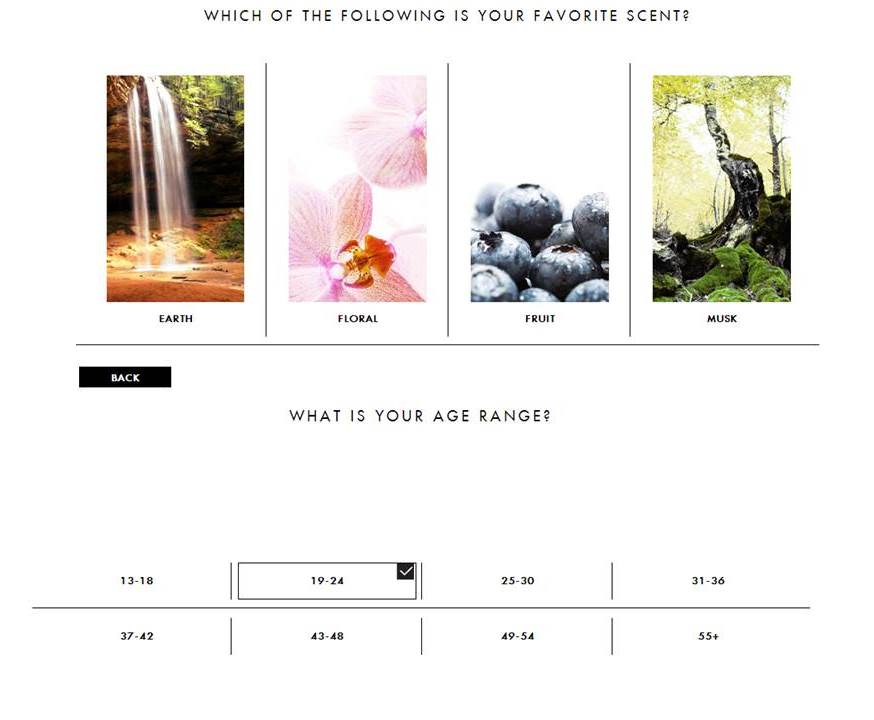
1. Complete a personal profile using basic questionnaire

Beauty Army

Beauty Army2

Beauty Army3

2. Based on a customer’s responses to the questionnaire, a set of 9 personalized beauty samples are populated and displayed for him or her to select up to 6.

3. The customer can update his or her profile for new selections or choose to skip a month whenever he or she wants.


Beauty Army’s value proposition is its use of big data to personalize product recommendations and allow its customers to choose his or her samples.

Why does big data analytics offer a competitive advantage for Beauty Army?

Big data analytics is the process of identifying unknown correlation or hidden patterns by analyzing large data sets.  Not only will big data analytics allow Beauty Army to personalize the customer’s subscription experience, but also allow the company to improve its accuracy of product recommendations over time based on the attributes gathered from the customer’s prior subscription preferences and the brands.  Additionally, big data analytics can be used to improve future sample offerings by identifying the more popular brands and the favorable brand attributes.  Another general advantage from being able to understand large data is the ability to provide transparency of the selection process and order status of a subscription as well as help a company and its brands optimize their marketing spend.

How else does Beauty Army compete?

Beauty Army also offers its own eCommerce shop, where customers can purchase full-size versions of the samples that they have received and liked (Good to Know: ~40% of Birchbox’s subscribers will purchase full-sized products on its site).  And like Foursquare, Beauty Army offers a badge reward system, in which you are a granted a certain badge and a reward for fulfilling badge requirements.  For example, to gain the recruiter badge and a free kit, a user will need to recruit 3 friends.  Reward programs are a great way to increase a customer’s involvement with the business and establish stickier customer relationships with individuals who are price-sensitive in a highly competitive industry.  See below for a snapshot of the badges available:

Beauty Army4

Beauty Army also offers gift packages (e.g. $36 gift bundles of 3-month subscriptions) and supports the Beauty Bus Foundation,  an organization that provides beauty and grooming services and pampering products to chronically or terminally ill men, women and children and their caregivers.


By the Numbers…

-Members: ~120,000 (Birchbox had ~45,000 members after one year since its founding)

-Paying Subscribers: ~4,500

(According to CEO Lindsey Guest, since launching in January 2012, Beauty Army has been doubling users and subscribers monthly)

-As of May 2013, +125 portfolio brands and accumulated 1.76 million consumer data points

-As of June 2013, revenue of ~$800,000


See Broke Beauty Blogger (http://www.brokebeautyblogger.com/p/subscription-box-list.html) for a list of beauty subscription services and their offerings.

Sources: Beauty Army website, Birchbox website, http://www.crunchbase.com/company/beauty-army#src3http://techcrunch.com/2012/10/18/beauty-army-health-and-wellness/,

“I’ll Pay You Back” or “I’ll Venmo It”

“I’ll pay you back”.  I’ve said this.  You’ve said this.  We’ve all at some point told someone this.  As the lender, you’re too embarrassed to remind the borrower to pay you back.  As the borrower, you struggle to find the most convenient, fee-free way to pay your lender back in a timely manner.

This past July 4th, my friends and I decided to spend the afternoon sailing along the coast of Lower Manhattan.  We made a reservation with Tribeca Sailing (http://tribecasailing.com/) and were asked to put down a $450 deposit.  I offered to make the upfront payment and asked that my friends pay me back.  Our money was well spent as we enjoyed beautiful California weather in New York, views of the financial district and the Statue of Liberty.  At the end of our lovely excursion, the awkward conversation about paying me back was inevitably brought up.  One of my friends quickly responded, “I’ll Venmo it to you!”  Another friend paid me in cash and the three other friends forgot.  It wasn’t until 2-3 weeks later until I had been fully repaid.  I kept thinking how easy and guilt-free it was for my first friend to pay me back using Venmo.

Ever since my friends and I discovered Venmo, our concerns with lending money or returning money have disappeared.  Venmo allows its users to instantly pay, receive and transfer money with each other for free via mobile device.  Unlike a bank account transfer that charges an external transfer fee for sending money to an account at another bank, there are no fees for bank account transfers or debit card payments on Venmo.  All transactions are free if you pay with Venmo balance, bank transfer, or valid debit card.  No longer will you have to pay the $3 fee for transferring money from your Bank of America account to your friends Wells Fargo account or pay an ATM fee for withdrawing cash.

Personal Account Page:

Venmo Account View

Transaction Page:

Venmo Transaction Page

There are only 2 requirements for using Venmo:

1. Physically be in the U.S.

2. A text message-enabled U.S. phone

One of the biggest concerns with Venmo is the security of a user’s account.  Many of my friends still refuse to use Venmo because they fear the possibility of someone hacking into their Venmo account and accessing their bank account information.  I will attempt to simplify how Venmo secures transactions and your accounts to help calm your fears about Venmo (Friends, read this, add me on Venmo and let’s practice splitting the bill over drinks!).

  • All financial information is encrypted on Venmo, which includes your bank account information and debit/credit card number.  And like all other credit card transactions, you are able to file a dispute with your credit card company and bank for any charges you think are fraudulent.
  • All personal information is stored and processed using third party servers located in secure data centers in the U.S.  The information is protected by physical, electronic and procedural safeguards in compliance with applicable US federal and state regulations.
  • Any data exchanged between one account holder to another are sent securely over a 256-bit Secure Socket Layer (SSL) encrypted connection, verified by VeriSign in order to prevent any third party interception.
    • What is SSL? SSL is a security technology that establishes an encrypted link between a web server (website)/mail server (Outlook) and a visitor’s browser/mail client.  When using SSL, all data exchanged over the internet is encrypted, including login credentials.
    • An SSL Certificate is needed to establish a secure connection.  The SSL Certificate verifies that a trusted third party has authenticated that organization’s identity.  All online businesses or websites that accept credit cards online require an SSL Certificate for website security.
  • All accounts on Venmo have bank-grade security and FDIC insurance.  FDIC insurance protects you against the loss of your bank deposits if an FDIC-insured bank or institution fails.  FDIC insurance is backed by the United States government.   Venmo guarantees all user funds against any unauthorized transactions.
  • When you send or receive money on Venmo, it’s actually put into a custodial account with Wells Fargo.   A custodial account is a trust account owned by an individual or institution, managed by a named party for purposes of rapid distribution of funds in that account.

For more information: https://help.venmo.com/customer/portal/articles/659272-is-venmo-safe-

Another reason to try out Venmo…

There is even a social aspect to the Venmo app as you are able to label and share your transactions with friends through a newsfeed (i.e. “Tiffany paid Teresa for Karaoke!”).